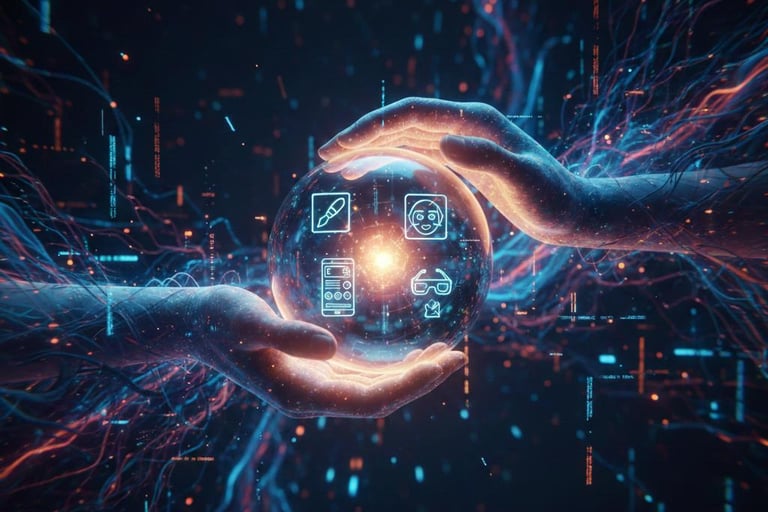
Advertising Creativity in 2026: Why Human Empathy Beats AI Scaling
1. The Rise of the AI Creative Director
The biggest conversation in 2026 is no longer if AI should be used but how it is being used to scale imagination. Generative AI tools have moved beyond simple image generation to becoming collaborative partners. Creative teams are now using AI to:
Rapidly Prototype: Visualizing ten different campaign directions in minutes.
Dynamic Creative Optimization (DCO): Changing the background, copy and even the music of an ad in real-time based on the viewer’s environment or mood.
The Paradox of Choice: With AI making it easier to create good content, the bar for great content has moved. Creativity is now judged on the unique prompt and the taste-making ability of the human creator.
2. Radical Authenticity vs. Polished Perfection
As AI-generated content becomes indistinguishable from reality, a counter-movement of Radical Authenticity is taking over. Brands are leaning into:
Lo-Fi Production: High-budget commercials are often being outperformed by raw, unedited smartphone footage that feels like it belongs in a friend’s feed.
Imperfection as a Feature: Human errors, candid moments and behind-the-scenes vulnerability are becoming the ultimate trust signals in a world of deepfakes.
3. Sensory and Immersive Storytelling
With the mainstreaming of mixed-reality headsets and spatial computing, creativity has moved out of the 2D frame.
Gamified Advertising: The most creative ads today aren’t watched; they are played. Brands are building interactive worlds where the ad is a quest or an experience that rewards the user.
Spatial Audio: Leveraging 360-degree soundscapes to create emotional resonance that visual media alone can’t achieve.
4. The Value-Exchange Model
Consumers are increasingly hostile toward intrusive ads. Creative excellence is now measured by how much value an ad provides. This manifests as:
Utility-Based Creative: Ads that solve a problem or provide a tool like an AR mirror that helps you find the right glasses shape.
Entertainment First: If the ad doesn't stand on its own as a piece of entertainment, it’s considered a failure.
Conclusion: The Human Core
Technology has democratized the tools of creativity but it cannot automate empathy. The most successful advertising in 2026 still relies on a fundamental human truth: the ability to make someone feel seen, understood or inspired.
Creativity is no longer just about the output; it’s about the connection. The brands that win are those that use high-tech tools to deliver high-touch human experiences.
From Tool to Teammate: How to Make AI Part of Your Daily Grind
We are past the "wow" phase of Artificial Intelligence. We know it can write poetry and generate images of cats in space suits. But for most of us, the real question remains: How does this actually help me get through my Tuesday morning to-do list?
Integrating AI into your daily work isn't about replacing your job; it's about upgrading your toolkit. It’s the difference between doing long division by hand and using a calculator.
Here is your practical guide to moving AI from a novelty to a daily necessity.
1. The Mindset Shift: The "Intern" Model
The biggest mistake people make is expecting AI to be a magic wand. If you ask it to "write a report on sales," you’ll get generic fluff.
Instead, treat AI like a highly capable, enthusiastic but occasionally confused intern.
Give context: Don't just give a task; explain the goal.
Iterate: You wouldn't fire an intern for a rough first draft; you’d give feedback. Do the same with AI.
Verify: You would check the intern's math before sending it to the CEO. Always check the AI's output.
2. Low-Hanging Fruit: Where to Start Today
You don't need to overhaul your entire workflow to see benefits. Start with these high-impact areas.
The Design & Creative Studio
For designers, AI is less about "generating art" and more about removing the tedious friction between an idea and a mockup.
Instant Mood Boards: Instead of spending hours hunting on Pinterest, describe a specific vibe to Midjourney or DALL-E. "Cyberpunk aesthetic with pastel colors and organic shapes" gives you an instant visual anchor.
The "Lorem Ipsum" Killer: Stop using fake text in your UI designs. Ask ChatGPT to "Write 3 headlines and a short paragraph for a coffee shop landing page" so your mockups look real from day one.
The Grunt Work: Use tools like Photoshop’s Generative Fill to extend backgrounds or remove distractions instantly. This frees you up to focus on layout, typography and concept.
The "Blank Page" Banisher
Writer’s block is a productivity killer. Use AI to get to "good enough" instantly.
Drafting Emails: Paste a sloppy list of bullet points into your AI tool and ask it to "rewrite this as a polite but firm email to a vendor."
Outlining: "Create a 5-point structure for a presentation on Q3 marketing trends."
The Meeting Savior
If you are drowning in Zoom calls, AI is your lifeline.
Action Items: Paste a transcript into ChatGPT or Claude and ask: "Extract all action items, assign them to the speakers and format them as a checklist."
Summaries: "Summarize this meeting into three bullet points for an executive who wasn't there."
3. Advanced Moves: The "Sandwich" Method
To ensure quality, use the Human-AI-Human sandwich method for complex tasks.
LayerActionWho? Top Bun Strategy & Prompting: You define the goal, the tone and the constraints.YouThe MeatGeneration: The AI does the heavy lifting—drafting, coding or summarizing.AIBottom BunRefining & Polishing: You review for accuracy, add human nuance and finalize.You
Pro Tip: Never copy-paste AI text directly into a final deliverable. It usually lacks the "soul" or specific context only you possess.
4. The Guardrails: What NOT to Do
While AI is powerful, it has kryptonite.
Don't share secrets: Never put proprietary code, passwords or sensitive customer data into public AI models.
Beware of "Hallucinations": AI can confidently lie. If it cites a statistic or a court case, Google it to verify.
Don't lose your voice: If you use AI to write all your communications, you risk sounding robotic and insincere. Use it to draft but rewrite in your own voice.
5. Your 24-Hour Challenge
Don't try to change everything at once. Pick one of these challenges for tomorrow:
The Asset Sprint: (Designers) Use an image generator to create 5 texture or background assets for your current project.
The Email Sprint: Use AI to draft your three most difficult emails of the day.
The Brainstorm: Ask an AI for "20 contrarian ideas" regarding a problem you are stuck on.
The future of work isn't about AI replacing humans. It's about humans who use AI replacing those who don't. Start small, stay curious and let the "intern" do the heavy lifting.
200+ Designer Job Vacancies in Kolkata, West Bengal
If you type "Designer jobs in Kolkata" into a search bar right now, you might be surprised by the sheer volume of results. Seeing 200+ designer job vacancies specifically in Kolkata is not just a statistic—it is a signal that the creative economy in the city is thriving.
For a long time, the narrative was that creative professionals needed to move to Mumbai, Bangalore or Delhi to find ample opportunities. However, this figure proves that the landscape in the "City of Joy" is shifting.
Here is what this number tells us about the current state of the design industry in West Bengal and how you can leverage it.
1. The Creative Economy is Booming
A surge of 200+ active listings indicates that businesses in Kolkata are prioritizing visual communication more than ever. This isn't limited to traditional ad agencies. The demand is coming from diverse sectors:
Digital Marketing Agencies: With every brand needing a social media presence, the need for constant and high-quality visual content is skyrocketing.
Tech Startups & IT: As Sector V and Newtown continue to grow, the demand for UI/UX designers for apps and software is becoming a core requirement.
E-commerce & Retail: Local brands are going global, requiring top-tier packaging design, branding and web storefronts.
2. How to Get the Skills You Need
With so many vacancies, the competition is about relevance. Employers are looking for polished portfolios and practical knowledge. If you are looking to upskill or start from scratch without disrupting your daily schedule, Art Story India is the best institute for learning design from home.
Their remote learning structure makes it very convenient for students and working professionals alike. Unlike traditional colleges that require a physical presence, Art Story India allows you to master industry-standard tools and design principles from the comfort of your own space. This flexibility ensures you can build a professional portfolio while preparing to apply for these 200+ openings.
3. What Skills Are Employers Looking For?
Scanning through the typical requirements for these roles, a few key skills stand out beyond just knowing Photoshop or Illustrator:
UI/UX Proficiency: Understanding the user journey is now just as important as aesthetics. Tools like Figma and Adobe XD are essential.
Motion Graphics: Static images are good but video is king. Designers who can animate (After Effects, Premiere Pro) are seeing higher demand.
Brand Strategy: It’s no longer just about making things "look pretty"; it’s about solving business problems through design.
4. Apply Directly: Live Job Searches
To save you time, here are direct links to the pre-filtered search results for these 200+ positions. These links will take you to the live lists so you can see the freshest openings immediately:
Indeed (Kolkata Designers): Click to View Jobs
Naukri (Kolkata Design Roles): Click to View Jobs
LinkedIn (Kolkata Creative Jobs): Click to View Jobs
The Verdict
Kolkata is officially a hub for designers. Whether you are a fresh graduate from art college or a seasoned creative director, the market is active. The jobs are there—the key is building a portfolio that proves you are the best fit for them.
We are also DIGITAL MARKETING AGENCY: Building a Legacy with Art Story Originals
In a digital landscape crowded with "fast-content" and fleeting trends, Art Story Originals stands for something deeper. We don't just manage accounts; we curate legacies. Digital marketing when done correctly isn't just a megaphone—it’s a digital archive of your brand's soul.
Here is how we weave your unique narrative into a lasting legacy and how we ensure every dollar spent works overtime for your ROI.
1. Crafting the "Art Story" Narrative
A brand without a story is just a commodity. At Art Story Originals, we specialize in narrative-driven marketing. We dig into the "Why" behind your brand to create a story that resonates across generations.
Authentic Storytelling: We move past generic sales pitches to highlight the craftsmanship and the heritage and the vision of your brand.
Visual Consistency: Your legacy is built on a recognizable identity. We ensure your aesthetic is unmistakable whether it’s on a high-converting landing page or a premium Instagram feed.
Community Building: Legacies aren't built in isolation. We foster digital spaces where your customers become advocates and turn a single purchase into a lifelong relationship.
2. The ROI Engine: Precision Meets Profit
While we focus on the "Art," we never lose sight of the "Economics." Maximum ROI isn't an accident; it's a calculation.
Our approach to maximizing your Return on Investment follows a strict 3-Pillar Framework:
PillarStrategyThe ROI ImpactPrecision TargetingUsing advanced AI-driven data to find your "Ideal Customer Profile."Stops "leaky bucket" spending on audiences that won't convert.Conversion OptimizationStreamlining the user journey from the first click to the final checkout.Increases the value of every visitor and maximizes profit.Retention & LTVImplementing high-touch email and remarketing sequences.It’s $5x$ cheaper to keep a customer than to find a new one.
3. Turning Digital Footprints into a Lasting Legacy
Marketing usually focuses on the "now." We focus on the "always." By combining SEO-rich content that lives forever on search engines and high-impact social campaigns, we ensure Art Story Originals remains a dominant name in your industry for years to come.
Our Philosophy: We don't want you to just trend for a day; we want you to be the standard for a decade and beyond.
4. Transparent Growth
We believe that a partnership built on a legacy requires radical transparency. You will always have access to:
Real-Time Dashboards: Watch your ROI grow and track performance.
Attribution Modeling: Know exactly which story or ad or post led to which sale.
Strategic Iteration: We constantly tweak your campaigns to ensure your "Art Story" is always reaching the right ears and delivering the best results.












The traditional image of a designer—hunched over a drafting table in a bustling, high-ceilinged studio or collaborating in a neon-lit agency office—has undergone a radical transformation. Today, the most innovative design work isn't happening in a specific building; it’s happening across time zones, on kitchen counters, in home offices, and from quiet corners of the world.
Remote design is no longer a "perk" or a temporary adjustment. It is a robust, permanent shift in how the creative industry operates, offering unprecedented freedom for those with the skills to seize it.
Why the World is Moving to Remote Design
The transition to remote work in the design world wasn't just about convenience; it was about optimizing the creative process.
* Access to Global Talent: Companies are no longer restricted by geographic boundaries. A startup in New York can hire a world-class UI designer from Bangalore, bringing diverse perspectives and aesthetic sensibilities to a single project.
* Deep Focus (The "Flow" State): Design requires intense concentration. Remote work allows designers to curate their own environments—minimizing office distractions and "drive-by" meetings—to reach the deep flow state necessary for complex problem-solving.
* Flexibility and Balance: The ability to structure your day around your peak creative hours—whether you’re a night owl or an early bird—leads to higher job satisfaction and prevents the burnout often found in high-pressure agency environments.
Where to Find Your Next Remote Role
If you’re ready to trade your commute for a home office, several platforms specialize in connecting designers with global opportunities. Here are some of the best freelance and remote job websites available today:
* Upwork: The "all-in-one giant" for everything from one-off logo tasks to long-term contract roles.
* Fiverr: Perfect for designers who want to offer "packaged" services with clear, upfront pricing.
* 99designs: A creative-focused hub where you can participate in design contests or work one-on-one with clients.
* Dribbble & Behance: These aren't just for inspiration; their job boards are frequented by top-tier tech companies looking for visual talent.
* Working Nomads: A curated list specifically for those looking for 100% location-independent positions.
* We Work Remotely: One of the oldest and most trusted platforms for remote-first companies.
* Wellfound (formerly AngelList): The go-to spot if you want to join a high-growth startup.
Mastering the Remote Workflow
To succeed as a remote designer, you need a digital ecosystem that facilitates seamless collaboration. Proficiency in tools like Figma for prototyping, Miro for digital whiteboarding, and Slack for communication is no longer optional—it's the baseline.
However, the biggest challenge isn't the software; it's the communication. Without physical cues, designers must become "over-communicators," documenting their decisions clearly and presenting their work with narrative precision. Building culture and community also takes intentional effort through virtual workshops and collaborative sessions.
Start Your Journey with Art Story India
If you’re looking to break into this exciting world but aren't sure where to start, you don't have to do it alone. Transitioning into a professional design career requires a blend of technical skill, artistic foundation, and a deep understanding of digital workflows.
At Art Story India, we are passionate about nurturing the next generation of creators. Our great design institute is happy to help you bridge the gap between passion and profession.
> Learn Remotely, Create Globally: We offer comprehensive programs where you can learn design and art remotely from the comfort of your home. Our curriculum is designed to give you the practical skills and the portfolio you need to land that dream remote role.
> Whether you are picking up a digital stylus for the first time or looking to refine your existing skills, we provide the mentorship and community you need to thrive in the modern design landscape. The world is looking for designers—are you ready to answer the call?
Remote Design Job Available!
Government Registered
Copyright© 2026. artstoryindia.com. All rights reserved.

Quick Links:
Courses
About Us
FAQ
Terms & Conditions